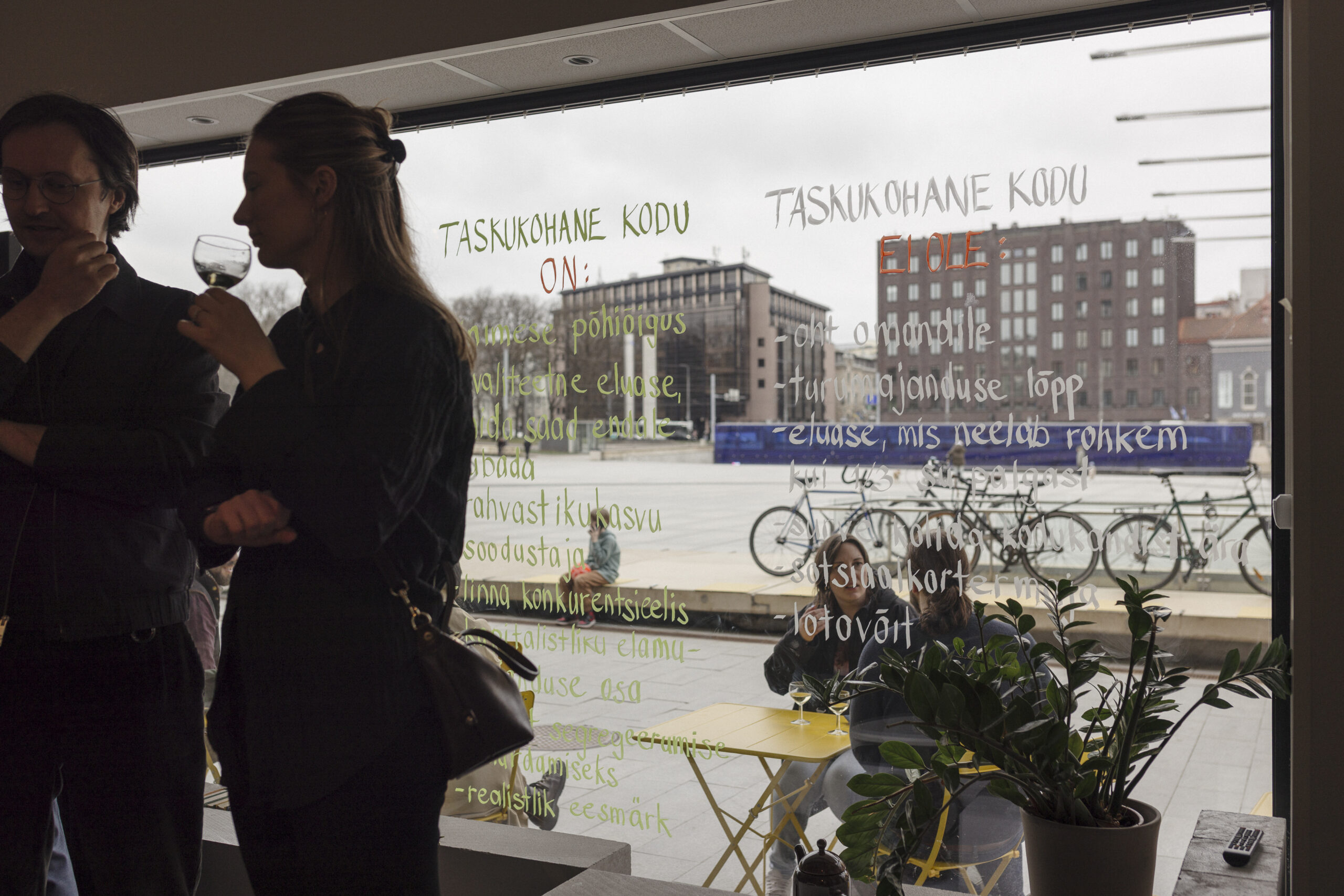
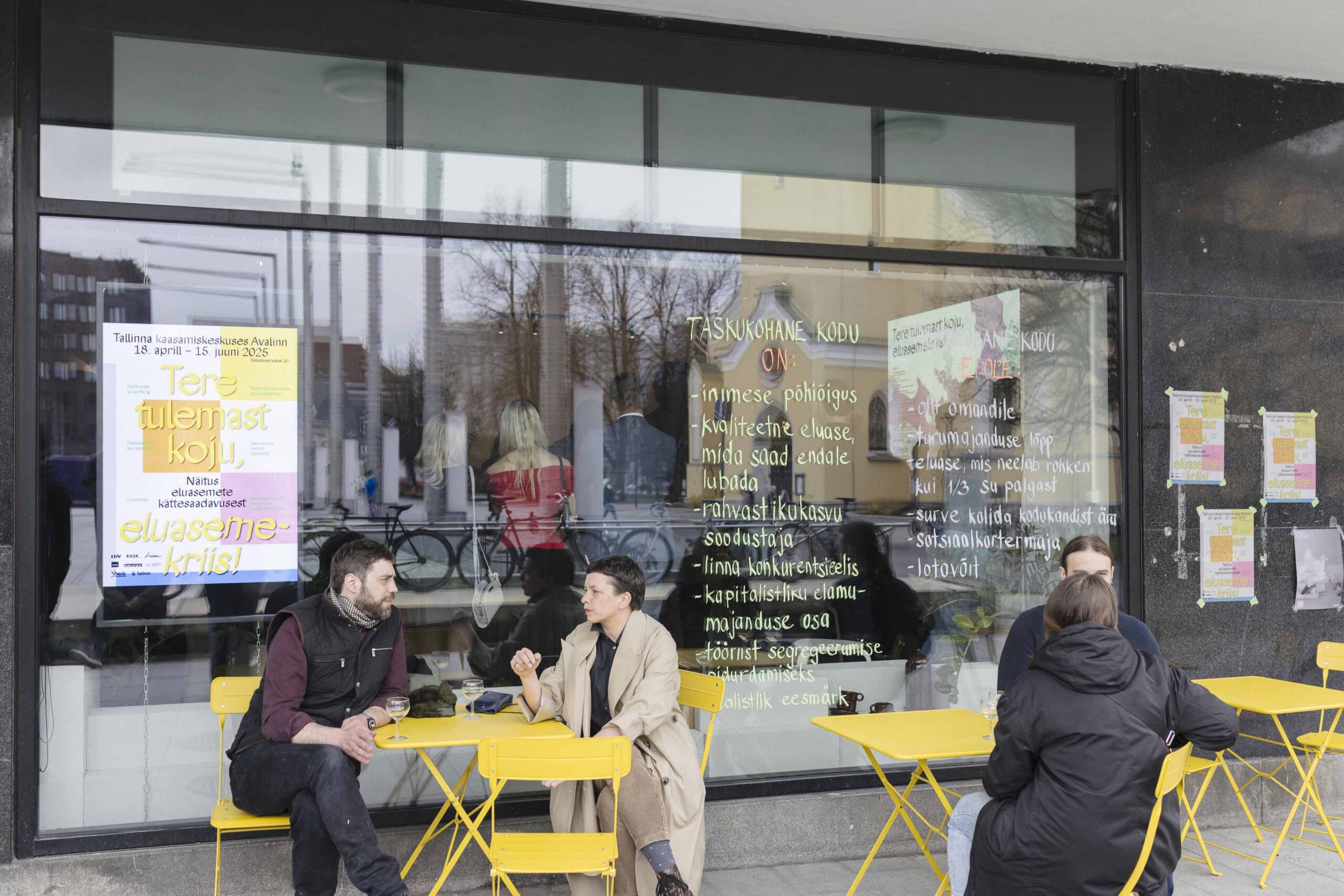
welcome home, housing crisis!
tere tulemast koju, eluasemekriis!
Year: 2025
Location: Avalinn, Vabaduse väljak 10, Tallinn, Estonia
Type: exhibition
Status: finished
Team: Eneli Kleemann, Katariina Mustasaar, Mia Martina Peil, Anna Riin Velner, Lill Volmer
Collaborators: stuudio TÄNA, Mark Aleksander Fischer, Spatialist Studio, Margus Tammik, Mari Möldre, Merilin Kaup, STUUDIO RETSEPT, LARStuudio, Helin Kuldkepp
Exhibition design: Sandra Mirka, Maria Helena Luiga
Graphic design: Aimur Takk
Sponsors: LHV, Liven, RASK advokaadibüroo, Bauroc, Eesti Kultuurkapital, Eesti Arhitektide Liit, Lincona, Tallinna linn
Photos: Joosep Kivimäe
A home is not just real estate. A home is a foundation of society. We won’t greet you empty-handed — instead, we’ll offer ideas for how to land softly in Estonia. Welcome home, housing crisis.
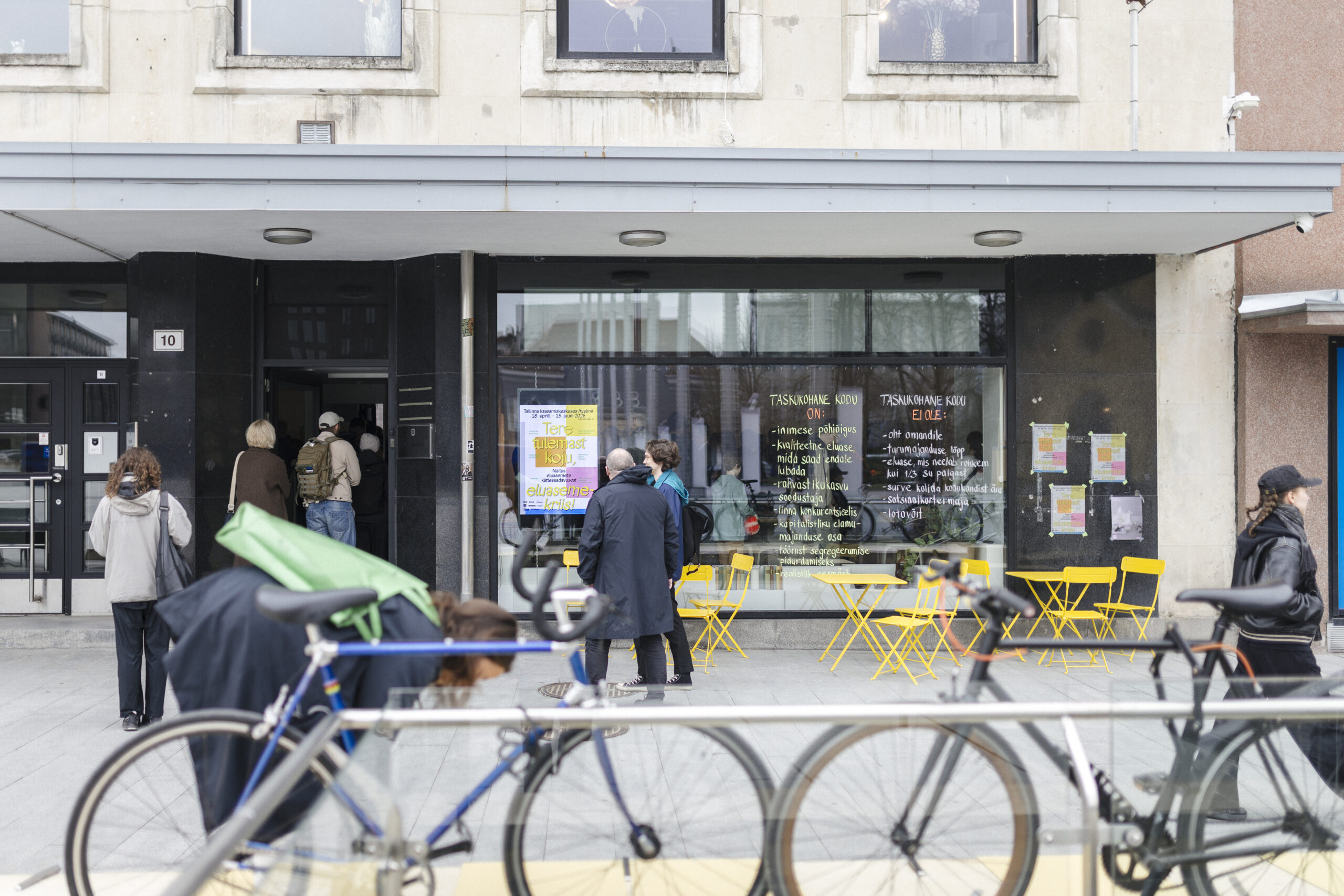
A home is precious to all of us. Especially to those who can’t afford one — those forced to move elsewhere, live in constant uncertainty, or postpone starting a family indefinitely.
This is the housing crisis.
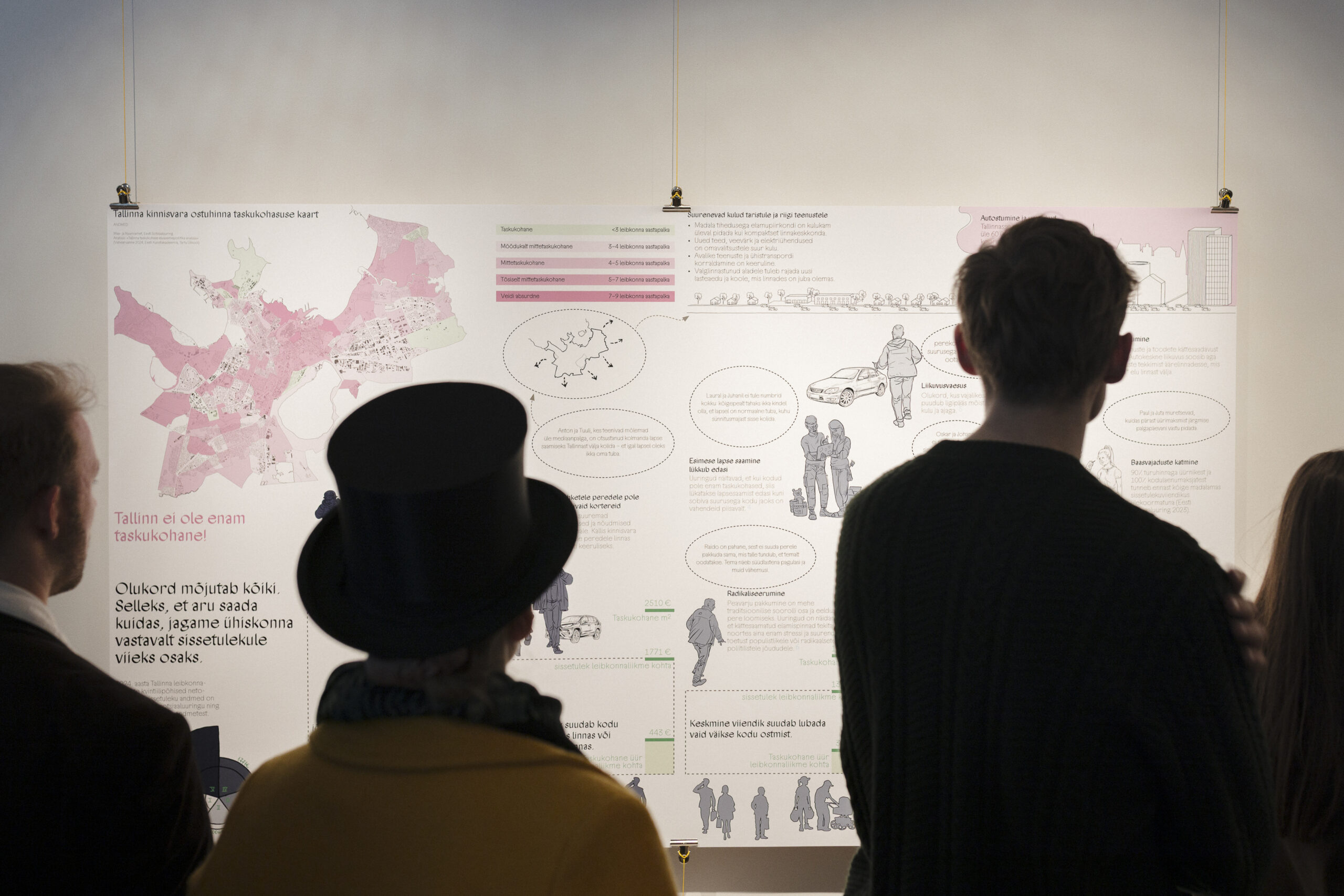
Something entirely ordinary and familiar, both across Europe and here in Estonia. We’ve simply forgotten that the “free” homes that came with privatisation — and the sense of security they offered — were
a historical shock, not a normal state of affairs.
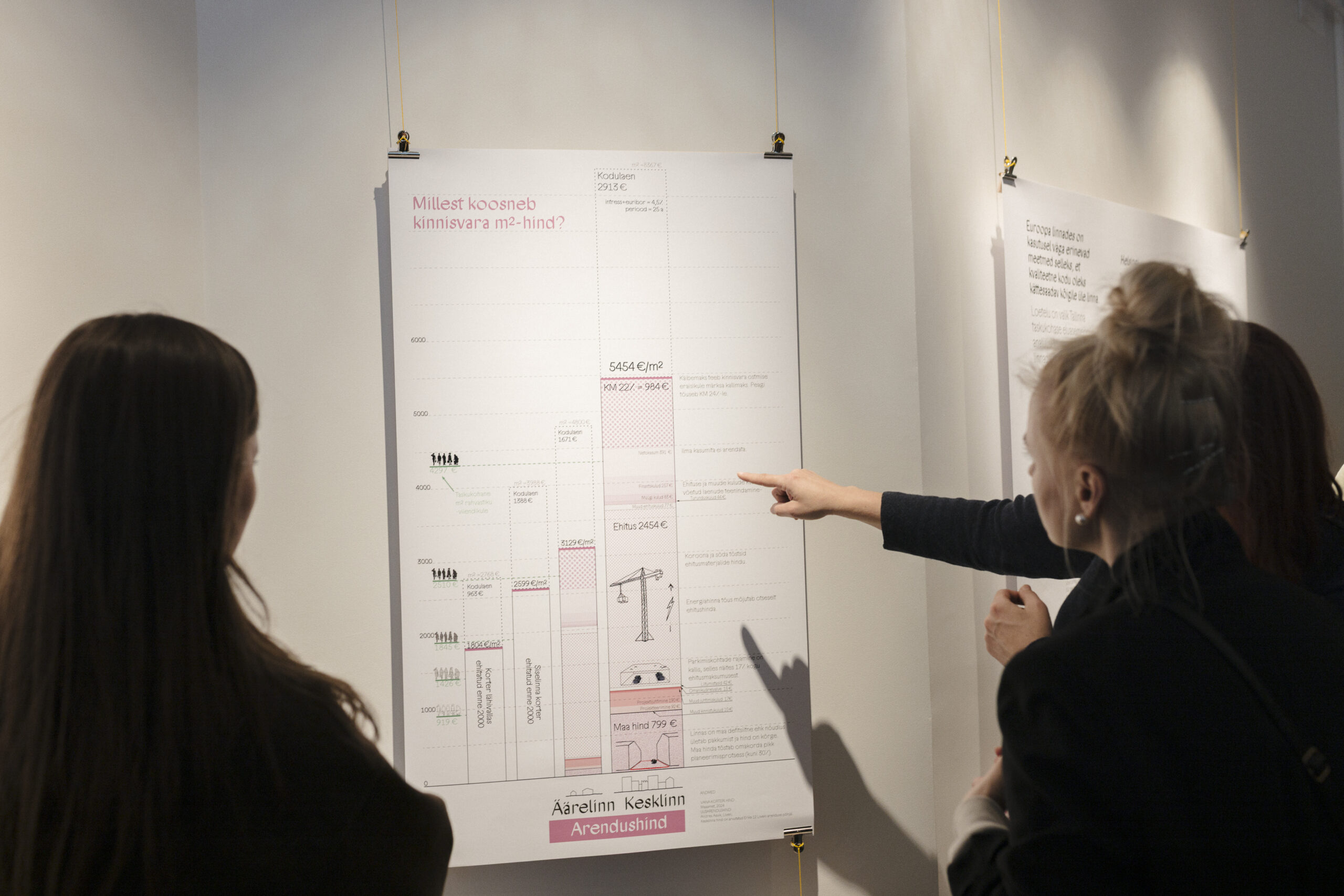
Over the past 34 years, the gap between market prices and wages has only grown wider.
A home is no longer affordable.
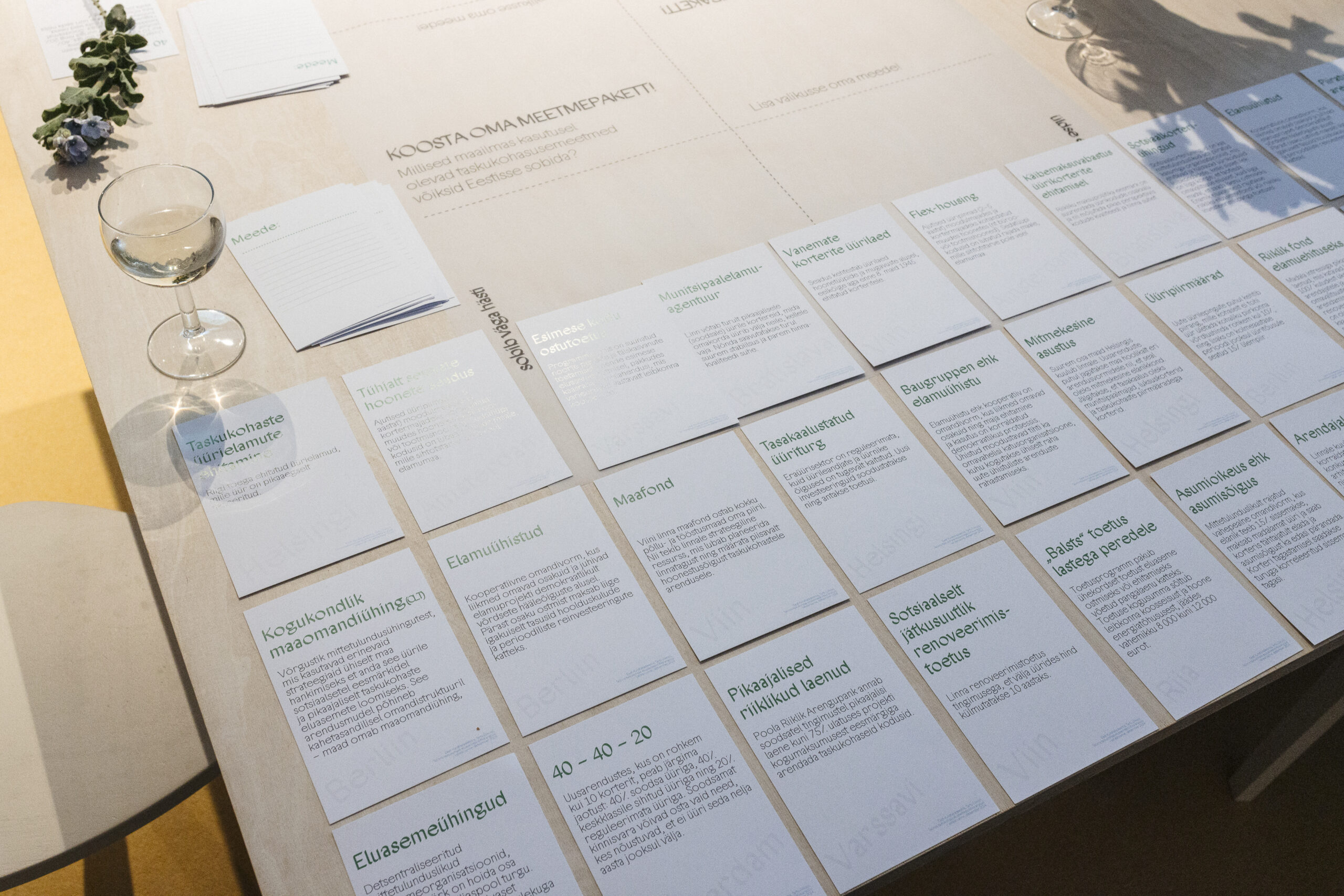
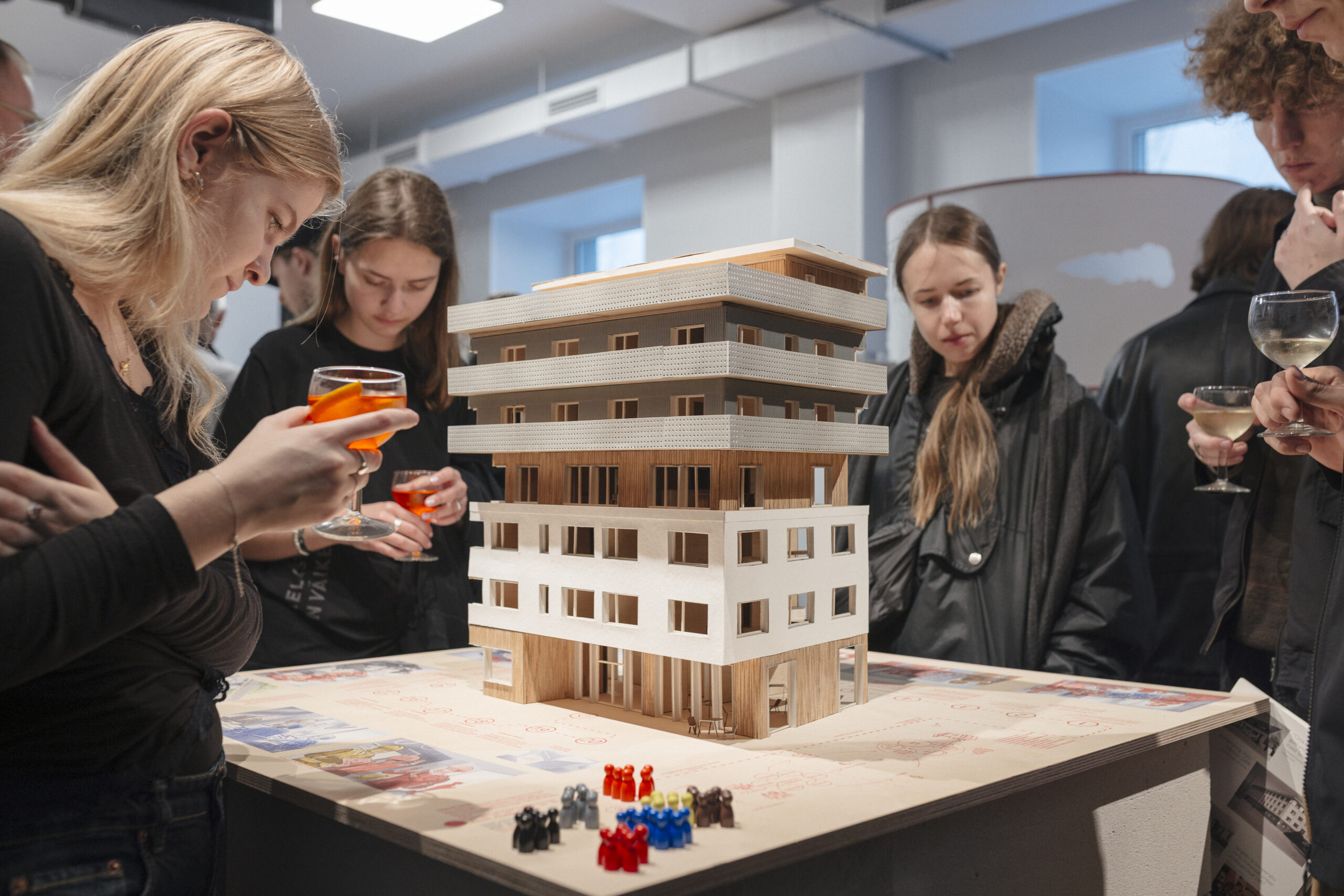
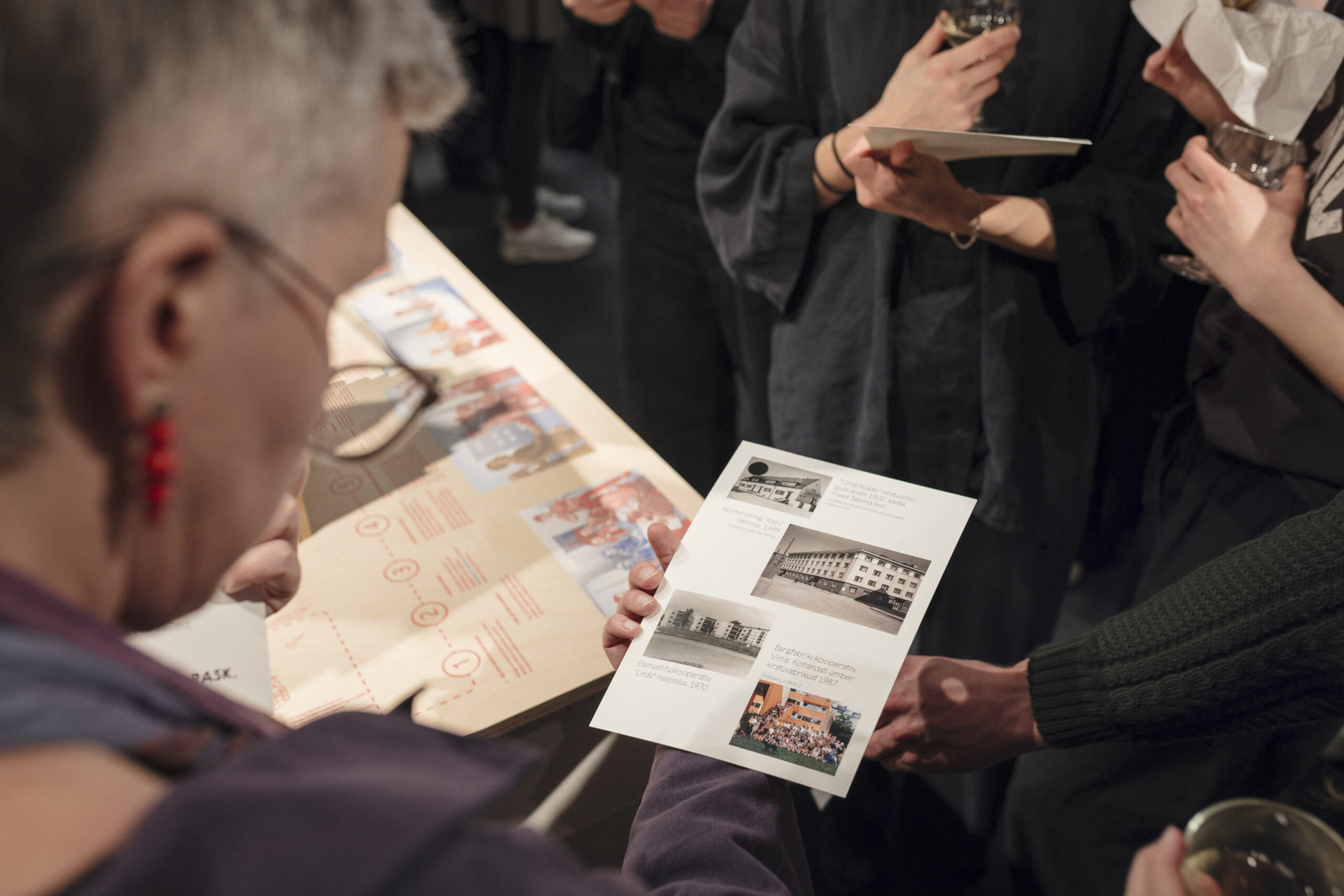
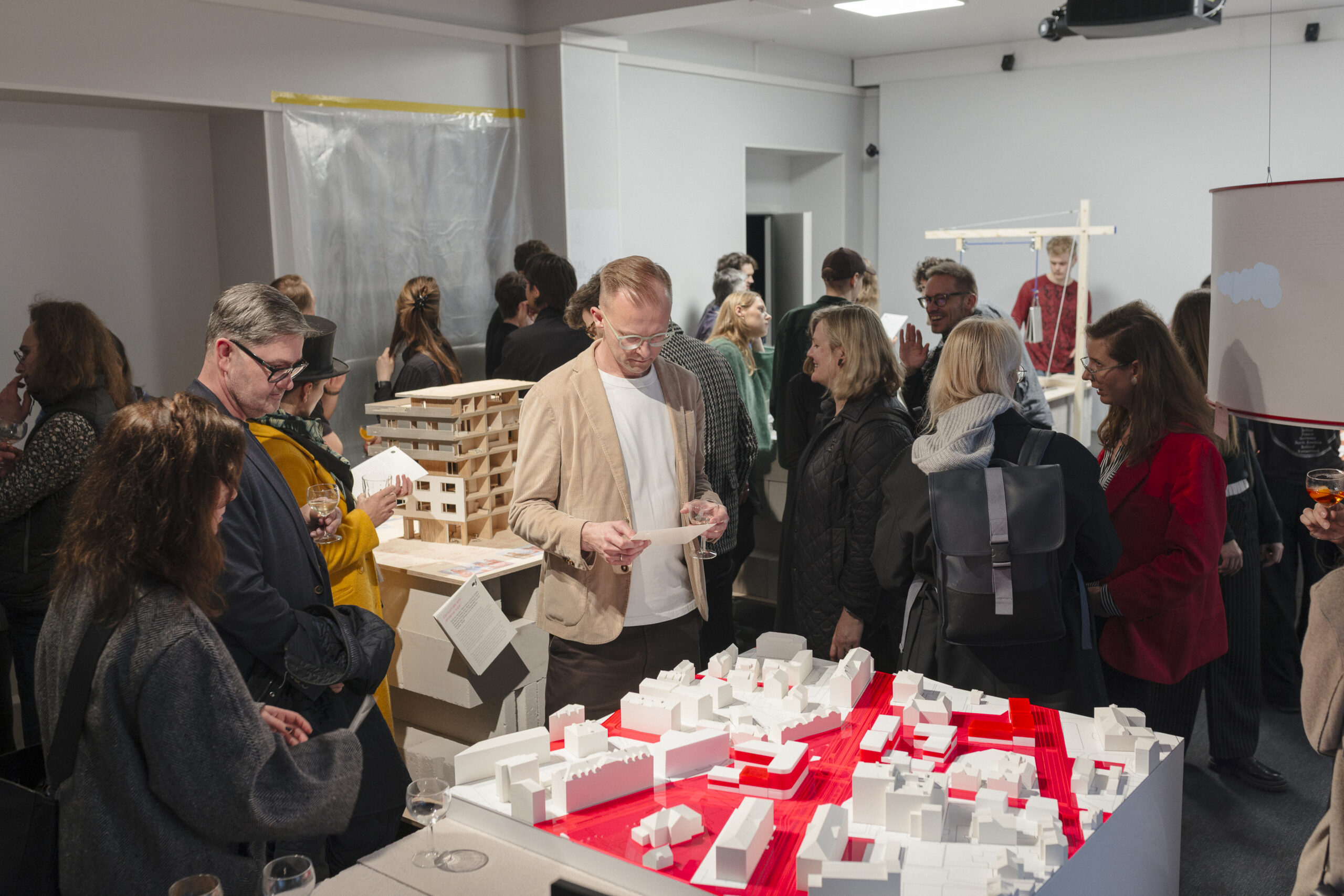
Curated by 20 young architects, this exhibition showcased solutions for mitigating the crisis. Affordability is not merely the result of market mechanisms, it also depends on active urban policies and political will.
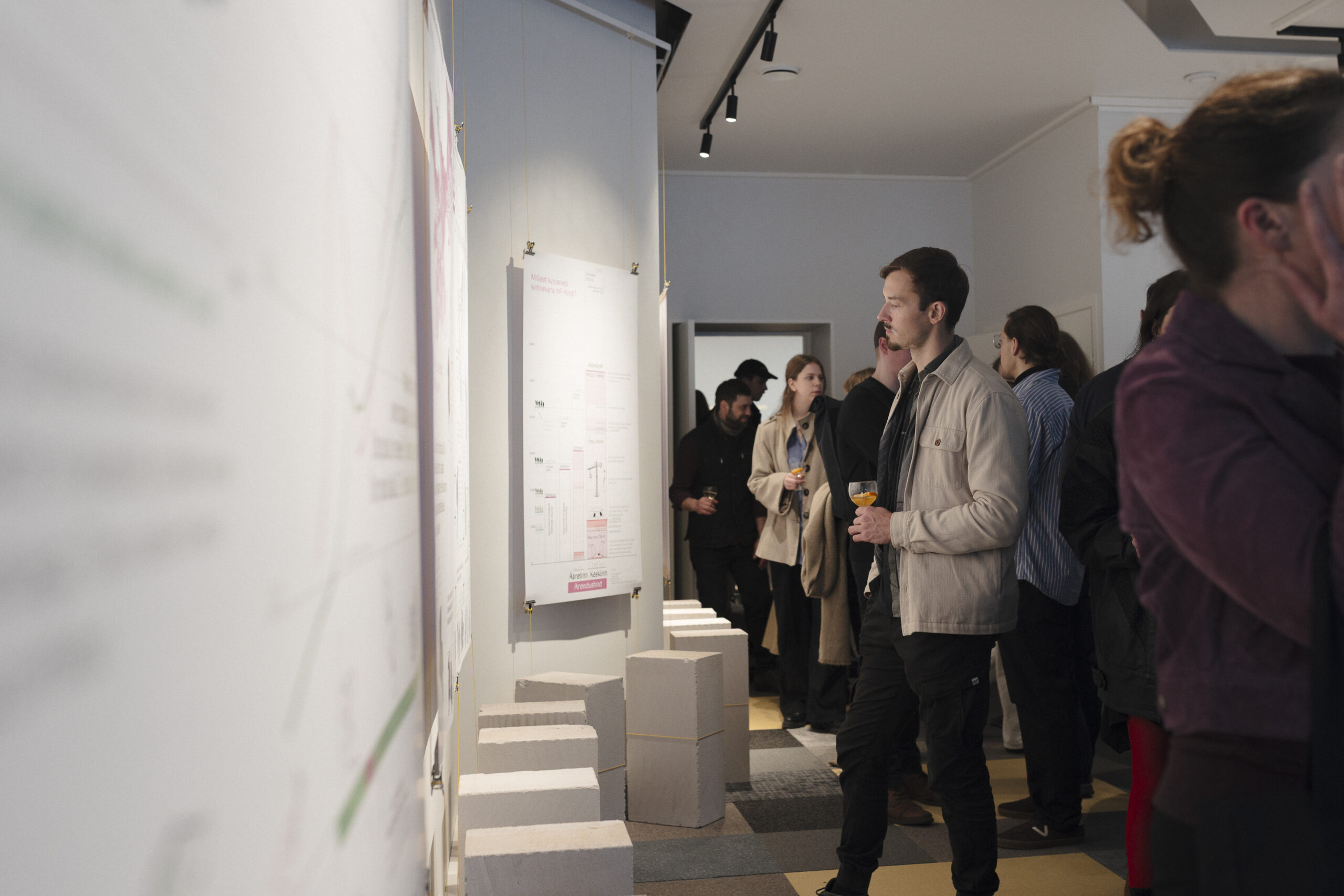
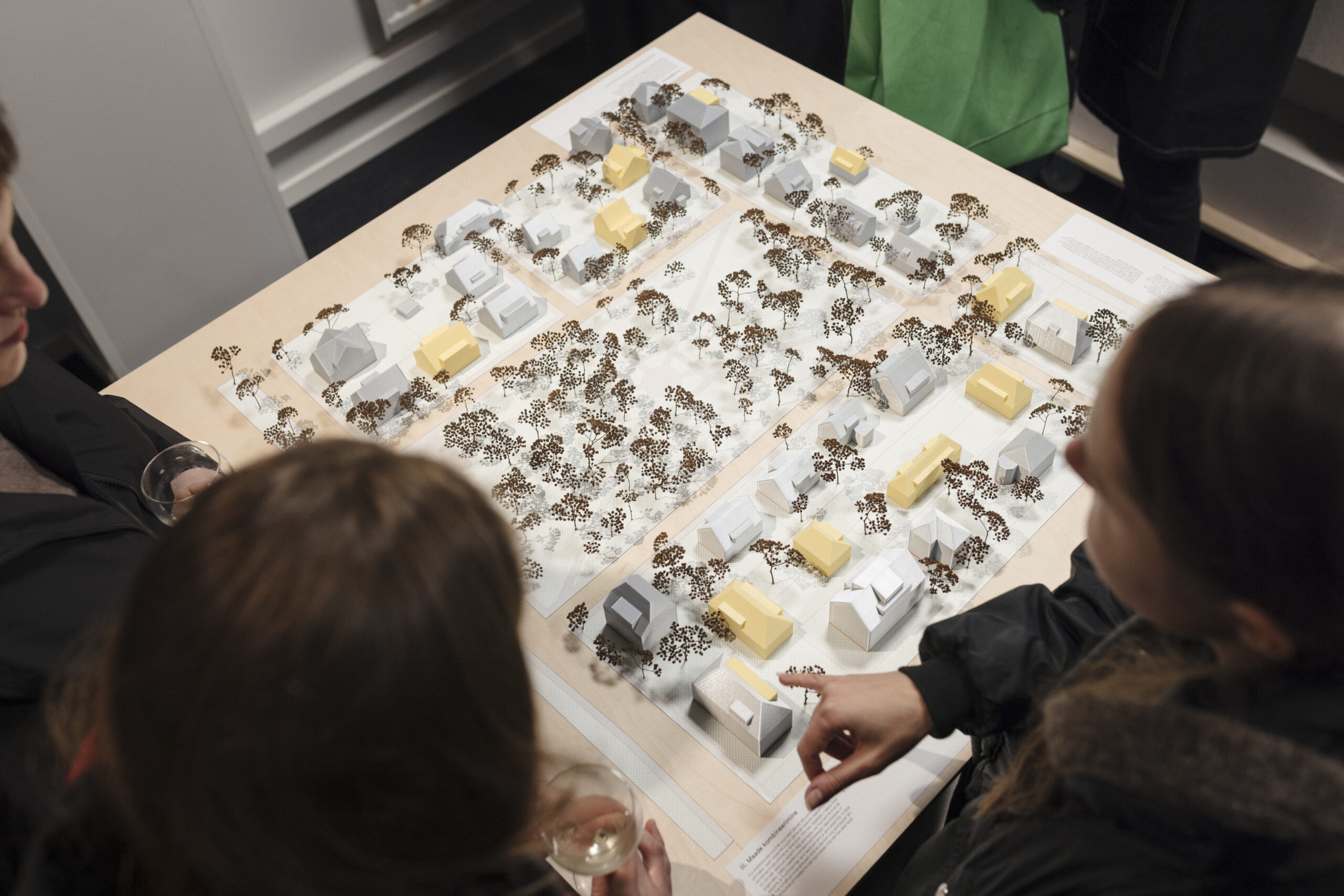
Drawing on successful practices from other European cities such as Vienna, Helsinki, and Berlin, the architects proposed spatial and non-spatial measures that could be adapted to the Estonian context. These included housing cooperatives, public–private co-development, self-initiated urbanism, gentle densification, new models for renovation, and affordable rental housing through collaboration.
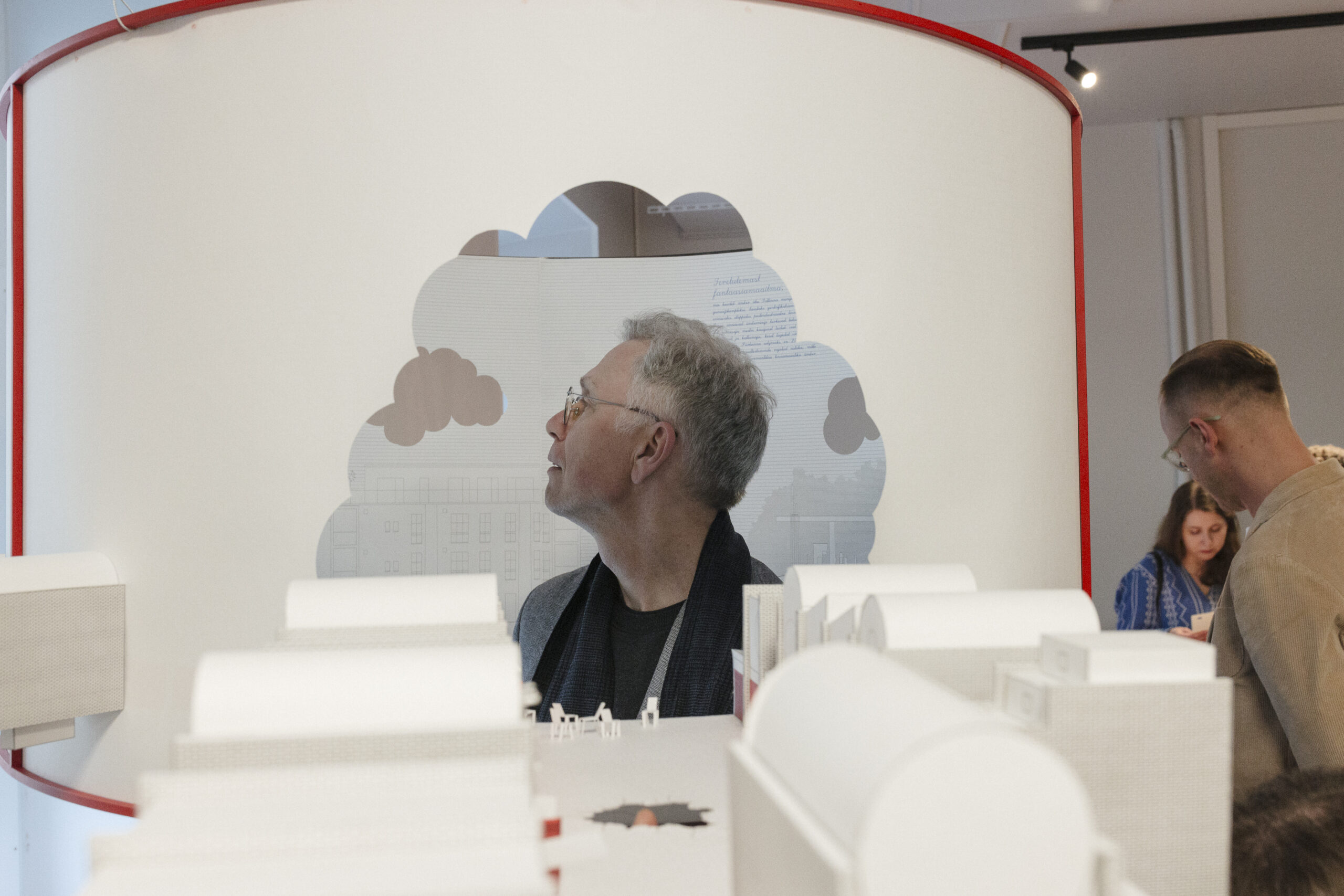
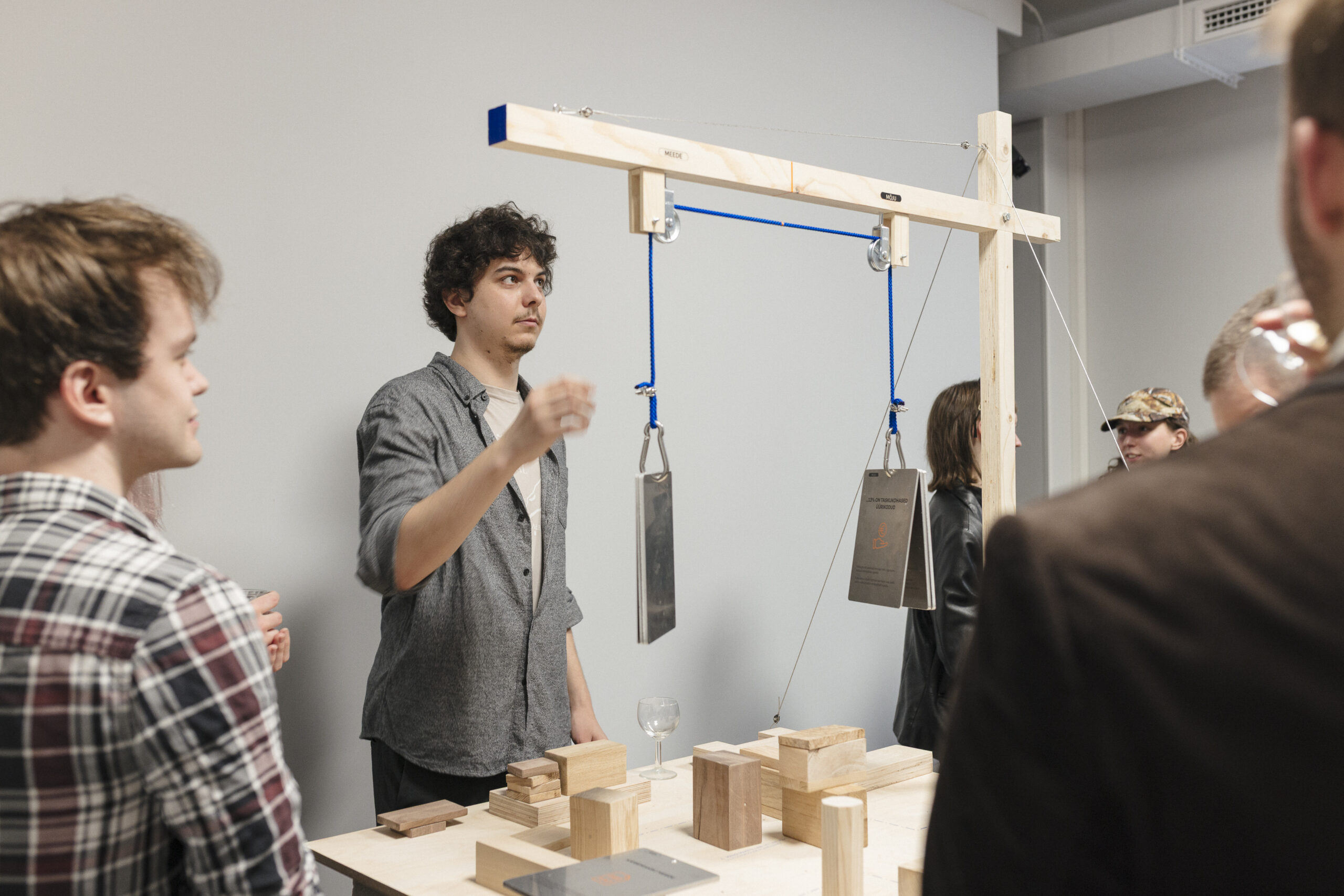
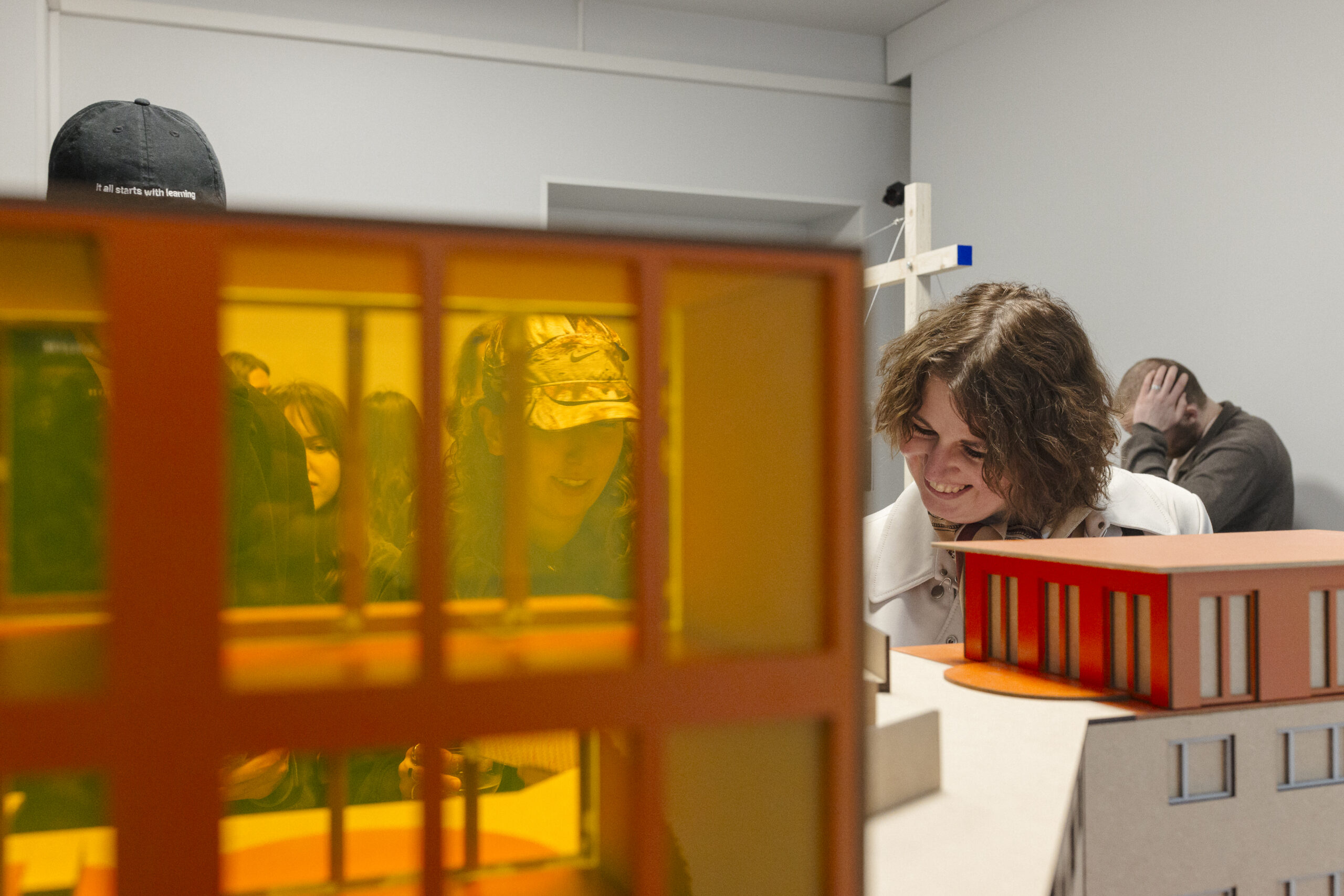
The exhibit by stuudio kollektiiv presented an interactive model where affordable housing emerges through strategic compromises between public and private sectors. A balance scale visualises how different public policies – development loans, increased density, tax incentives – impact the percentage of affordable units in a project.
Visitors can experiment with planning cubes to see, for example, how adding a floor or using municipal land affects outcomes. Some measures only yield 7% affordability; others up to 40%, depending on public sector contributions. It’s a practical, visually engaging way to explore what a fair deal between city and developer might look like.